
Last updated October 17, 2026
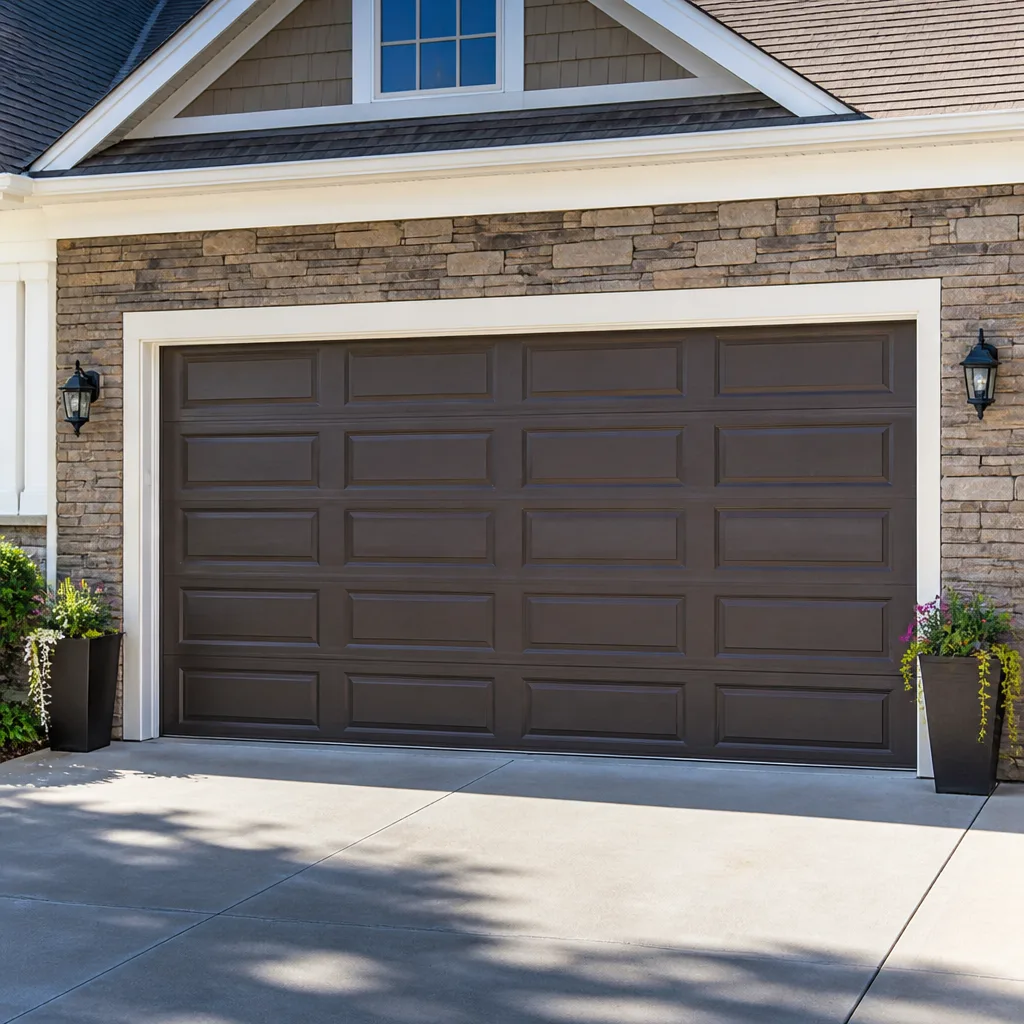 Raised-panel steel
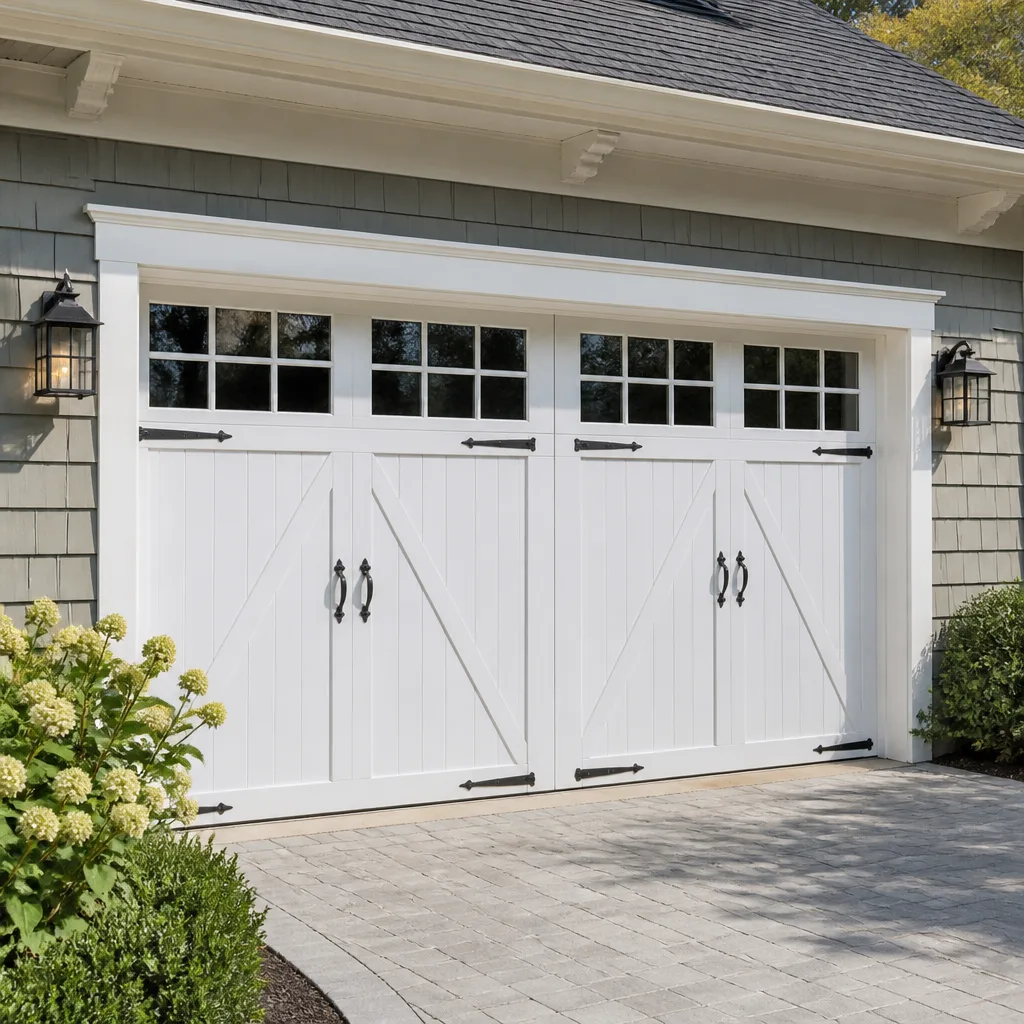 Carriage house
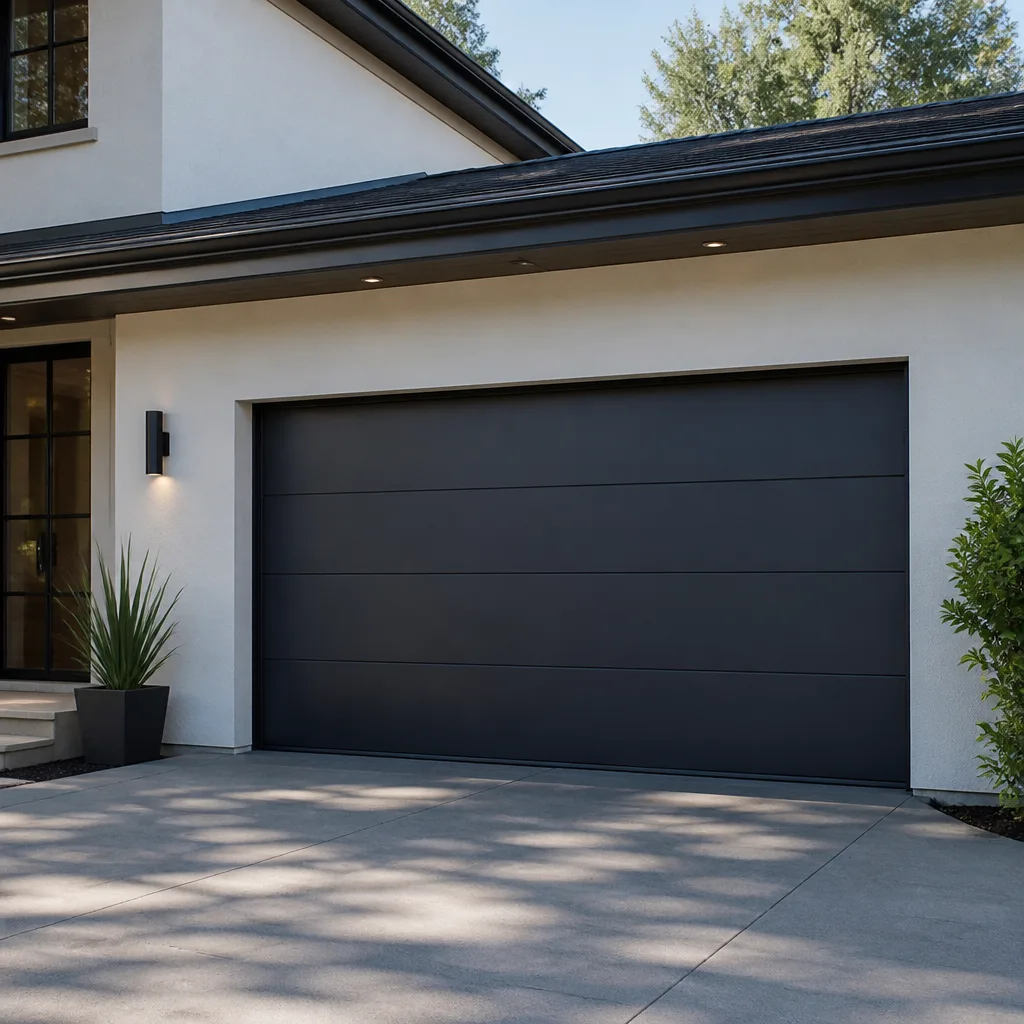 Modern flush
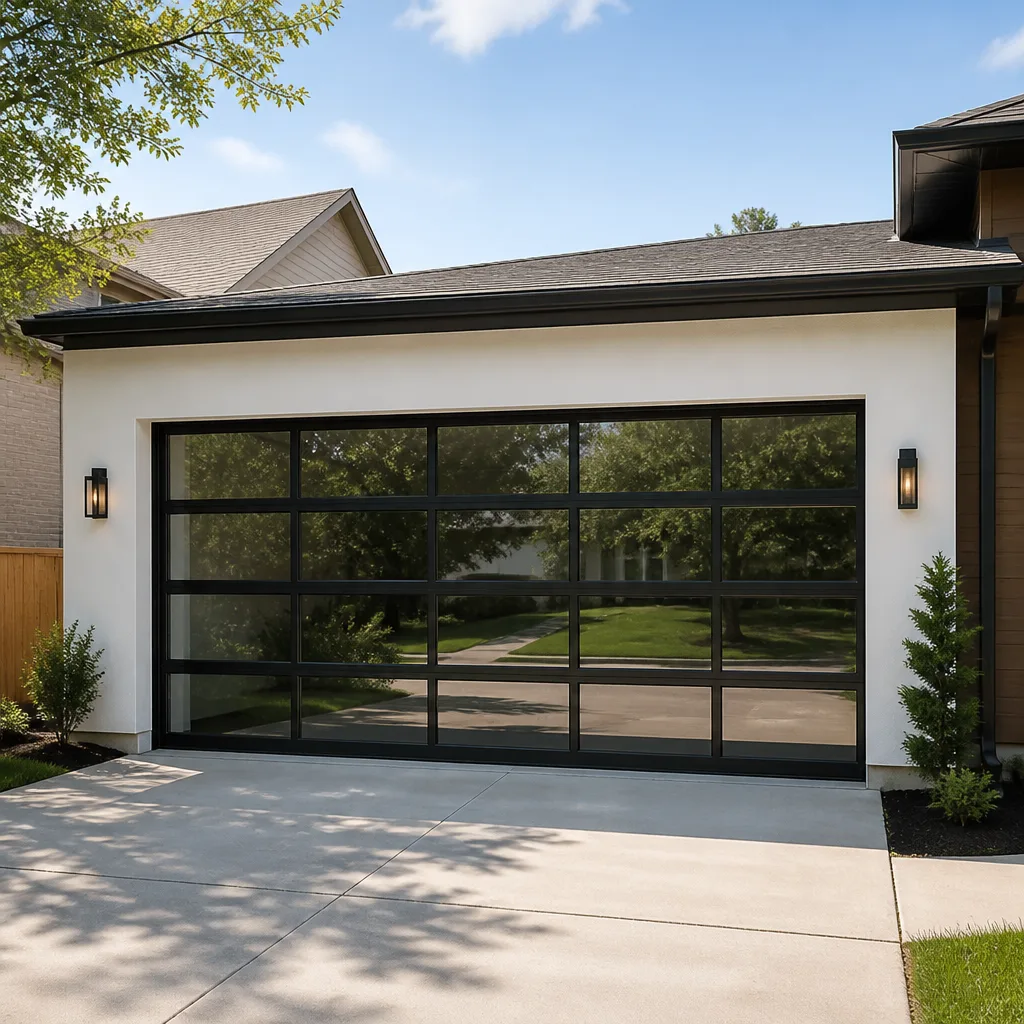 Full-view glass
 LiftMaster openers
 Chamberlain openers
Full 25-point door and opener safety check with every visit - springs, cables, rollers, tracks, and your LiftMaster or Chamberlain opener included
You get a price before we start. It does not change when the truck arrives.
Get your free estimateGarage Door Warning Signs: A Fort Worth Homeowner’s Reference Guide
A garage door weighs somewhere between 130 and 400 pounds depending on its material, and it cycles open and closed roughly 1,500 times a year in a typical Fort Worth household. That’s a lot of mechanical work happening over your car, your kids’ bikes, and the path your dog takes to the backyard. The loudest garage door isn’t necessarily the most dangerous one. A door that operates quietly but drifts down two inches after you release the wall button is telling you something more urgent than one that rattles on every cycle. Most homeowners in Fort Worth don’t know the difference until a technician is already in the driveway charging a diagnostic fee. This guide exists so you can read the signals your door is already sending, understand what they mean in mechanical terms, and decide what needs attention now versus what can wait. For a deeper look at everything covered here, see The Complete Guide to Garage Door in Fort Worth.
Styles & brands we work with
Quick Answer
Most garage door failures announce themselves days or weeks in advance through specific sounds, visual cues, and behavioral changes. The key warning signs in Fort Worth are grinding (worn rollers or bearings), popping (a spring beginning to uncoil), scraping (misaligned track), a door that drifts down when released (failing spring tension), and a door that reverses mid-cycle without touching anything (sensor misalignment or limit-switch drift). A slow door is often more serious than a loud door because it points to motor or spring fatigue rather than a simple lubrication issue.
Table of Contents
- The Sound-by-Sound Reference: Grinding, Scraping, Popping, Squealing
- Visual Signs You Can Spot From the Driveway
- Why a Slow Door Is Often More Serious Than a Loud Door
- The 30-Second Auto-Reverse Safety Test
- Fort Worth Climate: Seasonal Warnings vs. Real Problems
- What It Costs to Ignore a Warning Sign (In Real Numbers)
- Common Mistakes to Avoid
- When to Call a Professional
- Frequently Asked Questions
- The Bottom Line
The Sound-by-Sound Reference: Grinding, Scraping, Popping, Squealing
Your garage door speaks a language. The problem is that words like “grinding” and “scraping” get used interchangeably by people who aren’t listening for the difference. They are not the same thing, and they do not point to the same repair. Here is what each sound actually means in mechanical terms.
Grinding: A Rough, Metallic, Continuous Sound
Grinding happens when metal rolls against metal without enough lubrication, or when a roller has stopped rolling and is now sliding along the track. Inside your door’s rollers are sealed ball bearings. When the seal fails, dirt from a Fort Worth driveway works its way in, the bearing seizes, and the roller starts dragging instead of spinning. The sound is deeper and rougher than a squeak. It usually gets worse on cold mornings because the metal has contracted overnight. A grinding roller that isn’t addressed will eventually flatten on one side and start cutting a groove into the track itself. At that point you’re replacing the track section too, not just the roller. Lubricating a sealed bearing doesn’t fix it because the lubricant can’t reach the balls inside. The roller needs to be replaced.
Scraping: A Higher-Pitched Metal-on-Metal Sound That Usually Comes in One Spot
Scraping is typically a track alignment issue. If you hear it only when the door passes a specific point in its travel, one section of track has shifted or bent, and the door edge is catching it there. Fort Worth soil expands and contracts with drought and rain cycles, and homes on the east side of the city with heavy clay soil see more garage door track shift than homes in areas with sandier ground. A scrape that appears suddenly after a storm can also mean a track bracket has loosened from the wall. Check the bolts on the vertical track near where you hear the sound. If the track itself is bent, do not try to bend it back with a hammer. Bent track sections are replaced, and the brackets are realigned with a level.
Popping: A Sudden, Sharp Sound, Often Followed by a Bang
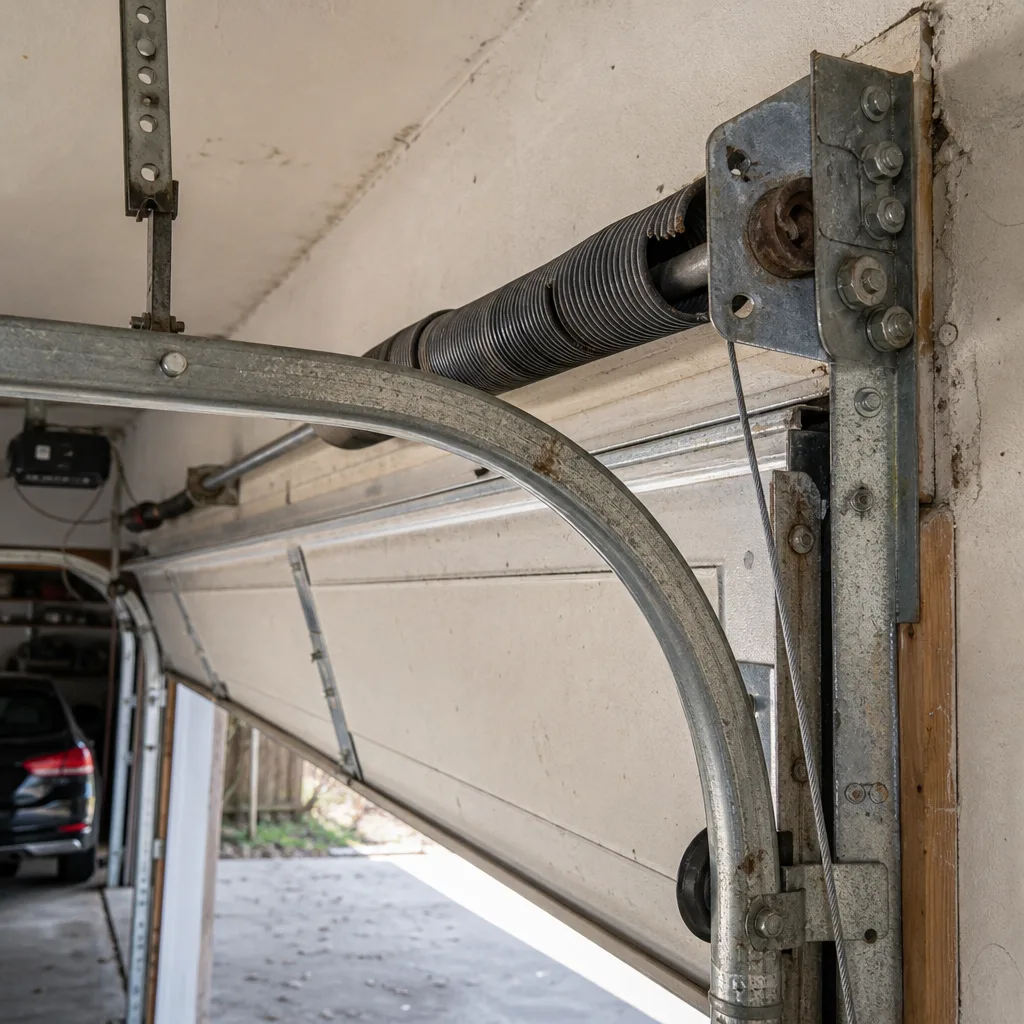
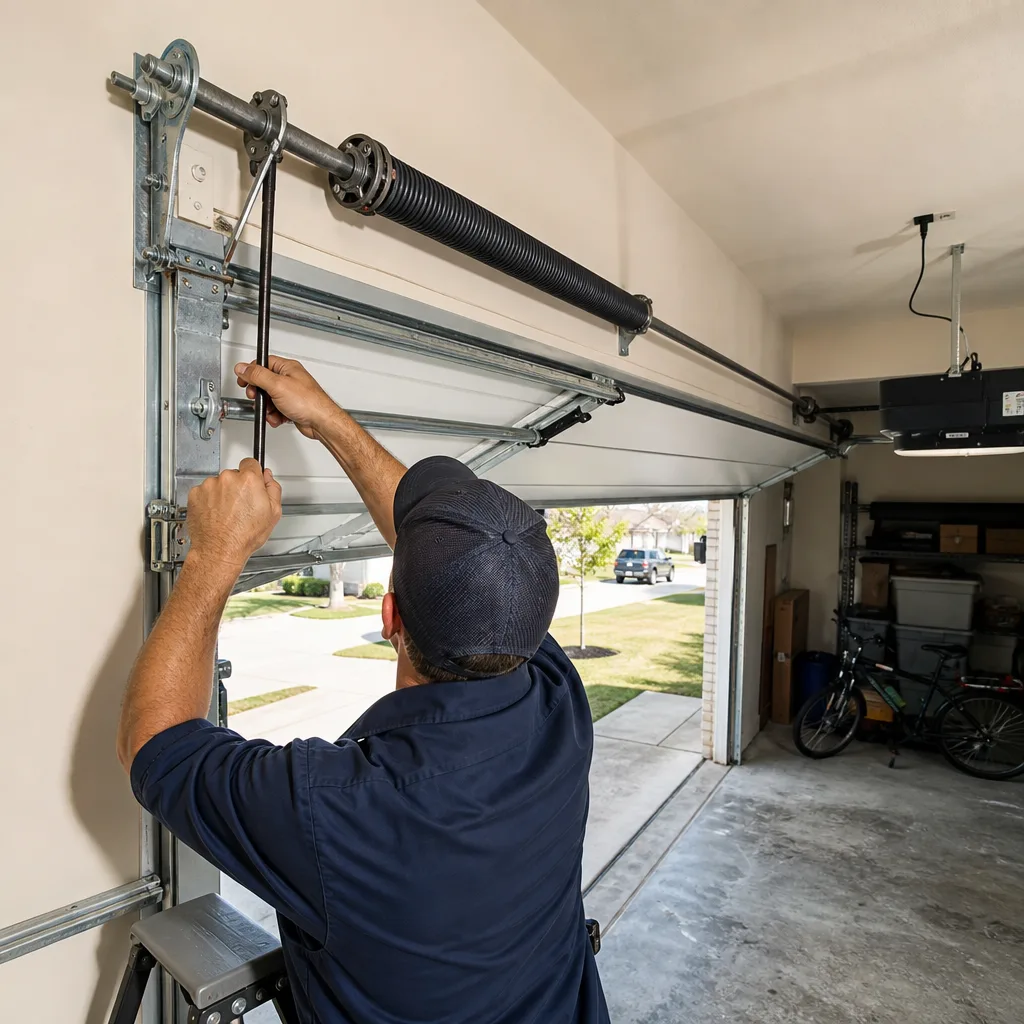
Popping is the sound of a torsion spring beginning to uncoil. Torsion springs sit on a metal bar above the door opening and hold counterbalance tension that makes the door feel light. When a spring starts to fail, individual coils snap under tension, making a sharp pop. It might sound like a gunshot or a sledgehammer hitting drywall. If you hear a pop and the door still opens, do not keep using it. The remaining spring is now carrying the full load it was never designed to carry alone. It will fail, and when it does, the door can drop hard. Fort Worth homes with double-wide doors have two springs, which is why one can break and the door still works, just heavier and harder on the opener. Popping means a spring replacement is needed now, not next week. This is not a job for a homeowner. Torsion springs hold enough tension to seriously injure or kill someone who tries to remove them without the proper winding bars and training. Call a licensed technician.
Squealing: High-Pitched, Steady, and Usually Annoying Rather Than Dangerous
Squealing is the most common sound we hear about on service calls in Fort Worth, and it’s usually the least serious. It means metal parts are dry. The hinges, the roller stems, the bearing plates at the ends of the torsion tube. On older doors it’s normal in dry weather, which Fort Worth has plenty of. Squealing is fixed with a garage door-specific lubricant applied to hinges and bearing plates. White lithium grease works well. Do not use WD-40, which is a solvent and will strip lubrication rather than restore it. Do not lubricate the track itself. Rollers need to grip the track to spin; a slick track just makes the door slide and wears flats onto the rollers. If a lubricated hinge still squeals, the hinge is worn and should be replaced before it cracks.
We carry replacement rollers and hinges on our trucks for this exact reason. When a door is making one of these sounds in Fort Worth, the most useful thing we can do is identify which part is talking before it stops talking and starts breaking. A sound you can name is a repair you can plan. A sound you can’t name is a diagnostic fee, and we would rather save you that visit.
Visual Signs You Can Spot From the Driveway
You don’t need to touch anything to see most of what’s about to go wrong. Stand in your driveway, look at the door closed, and work through this list. These are the signs that most homeowners in Fort Worth look past every day.
- The uneven top seal gap: Close the door and look at where the top panel meets the frame. If daylight shows through on one side and not the other, one spring is carrying more load than the other, or one cable has stretched. The door is pulling to one side. This is a visual version of the popping sound. The fix is a spring or cable adjustment, and it’s much cheaper to do now than after the cable snaps.
- One side sitting lower: If the bottom of the door isn’t parallel to the garage floor, a cable has slipped or one spring has lost tension. Fort Worth homeowners see this most often in spring, when temperature swings are wide, because metal expands and contracts daily. Don’t run the door if it’s visibly uneven. Each cycle adds wear to the low side.
- Gaps at the bottom corners that weren’t there before: Bottom weather seal (the rubber strip at the base) flattens and hardens over time, especially after Fort Worth summers where garage interiors can hit 110 degrees. A brittle seal lets in dust, leaves, and the occasional scorpion. A new seal is a quick, inexpensive fix.
- Cracks in the panel surface: Wood doors show splits. Steel doors show dents that crack the paint, which then rusts along the crease. Cracks don’t stop the door from working, but they let moisture into the panel core, and a waterlogged panel gets heavy. That added weight shortens spring life.
- Frayed cables: Look up along the sides of the door. Each side has a steel cable running from the bottom bracket up to the spring assembly. If you can see individual wire strands fraying, like a rope coming apart, the cable is near failure. Do not stand near it while the door moves. Cable snap injuries are common and severe. Call your Garage Door Repair in Fort Worth professional the same day you notice it.
- Door that looks bowed or curved from outside: Steel doors can warp if one panel absorbs more heat than the one above it, which happens on west-facing Fort Worth garage doors in July. A bowed door puts uneven pressure on the hinges and rollers, and the hinges on the stressed side fail first.
If it helps to think of it this way: the visual signs are just sounds that haven’t started yet. An uneven door pull is a future pop. A frayed cable is a future dropping door. The driveway inspection takes two minutes and costs nothing.
Why a Slow Door Is Often More Serious Than a Loud Door
Homeowners call about loud doors. Technicians worry about slow doors. A loud door is usually a lubrication or roller issue, which is inexpensive to fix. A slow door means the opener motor is straining, and there are three common causes, each with a very different price tag.
- Weak springs: The springs are supposed to do the lifting. The opener is just the trigger. When springs lose tension with age, the opener motor starts doing the lifting, and motors were not designed for that job. The door moves slower. The motor runs hotter. This is the most common cause of a slow door on Fort Worth homes with original springs older than seven to nine years. The fix is spring replacement.
- A failing opener motor or gear: If the springs are fine and the door still barely moves, the opener’s drive gear may be stripping. Plastic gears inside the opener wear down over time. The door moves slower as the gear slip gets worse. The fix is a gear replacement or a new opener.
- Track resistance: A door that has shifted out of alignment drags against the track, which makes it slow. This can also read as a door that hesitates at a certain point. The fix is track realignment.
The distinction matters because it changes the repair cost significantly. Springs are a few hundred dollars and last seven to nine years in Fort Worth’s climate. An opener motor replacement can run from $350 to $750 depending on the brand and horsepower. Track realignment is usually under $200. When we diagnose a slow door, the first thing we check is the spring balance by disconnecting the opener and lifting the door manually. If it’s hard to lift or won’t stay up, the springs are the problem, not the motor. That test tells us where the money should go, and we will tell you before any work is quoted.
The 30-Second Auto-Reverse Safety Test
Since 1993, every garage door opener sold in the United States has been required to have an auto-reverse mechanism. If the door meets resistance while closing, it should stop and reverse within two seconds. This is the feature that keeps a door from closing on a child, a dog, or a bicycle left in the doorway. The test takes 30 seconds with a piece of wood you probably already have.
- Place a 2×4 flat on the ground directly under the path of the closing door, in the center of the opening.
- Close the door using the wall button or a remote.
- Watch what happens when the door reaches the 2×4. It should reverse direction immediately on contact and return to the open position.
- If the door stalls, keeps pressing down, or only reverses partway, the auto-reverse is not working. That door is not safe around kids or pets.
Test this every three months. Fort Worth families with young kids and dogs should treat it like a smoke detector battery check. If the door fails the test, the fix is usually a limit-switch adjustment or a sensor realignment, both of which are quick service calls. Some openers also have a secondary safety system: the photo eyes near the bottom of the track on each side. Pass a cardboard box through the beam while the door is closing. The door should reverse without touching the box. If either test fails, stop using the door until a technician has looked at it. A door that doesn’t reverse is a door that should not be operated.
Fort Worth Climate: Seasonal Warnings vs. Real Problems
Fort Worth’s climate does two things that affect garage doors more than people expect: wide temperature swings in spring and fall, and long, dry, hot summers that bake everything facing west. Some warning signs appear seasonally and correct themselves. Others get worse with every cycle. Here’s how to tell the difference.
Cold-morning stiffness (November through March): When the temperature drops below 40 degrees, your door will be slower and louder on the first cycle of the morning. Metal contracts, grease thickens, and rubber seals stiffen. This is normal and self-corrects once the garage warms up or the day hits 60. If the door is still slow at 2 p.m. on a 65-degree day, that’s not weather. That’s a spring or motor issue.
Rust acceleration (April and May, after wet spells): Fort Worth gets most of its rain in spring. Water splashes onto the bottom of the track and the hinges when you pull a wet car into the garage. Bare metal starts rusting within days. This is a maintenance issue, not a failure. Wipe down the bottom brackets and hinges after heavy rain, and reapply lubricant. If you see rust scaling, the part is weakening.
Thermal bowing (June through August): West-facing doors in Fort Worth absorb direct afternoon sun. Steel panels expand. On the hottest days, a door can bow outward enough to look visibly curved from the driveway. This usually settles at night when the panel cools. But repeated thermal cycling weakens the panel over time, and a door that bows every summer is slowly degrading. Adding insulation or painting dark doors a lighter color reduces the effect.
Spring shift (February through April and September through November): Fort Worth’s clay soil expands after rain and contracts in drought. Homes on clay-heavy soil, especially in areas like the Fossil Creek watershed, see brackets move by fractions of an inch each season. That’s enough to make a door scrape. If the scrape disappears after a few days, it was soil movement. If it persists, the track has shifted and needs to be realigned. The 48-hour rule: if a new sound or visual sign is still present after two days of normal weather, it’s mechanical, not seasonal, and it should be looked at.
What It Costs to Ignore a Warning Sign (In Real Numbers)
Fernbrook Garage Doors Fort Worth quotes every repair with a written price before any work starts. That means you know the cost of the repair you need before we touch the door. It also means we can tell you, with real numbers, what ignoring a warning sign tends to cost later. Here’s what we’ve seen on Fort Worth service calls.
- Squealing hinge, ignored: A $15 hinge replacement becomes a cracked panel when the hinge freezes and the door bends around it. Panel replacement runs $300 to $600 depending on the door material.
- Grinding roller, ignored: A $25 roller replacement becomes a track replacement when the flat roller cuts through the metal. Track sections run $120 to $200 per section, plus labor.
- Slow door, ignored: A spring replacement that should cost $180 to $340 becomes an opener motor replacement at $350 to $750 when the overworked motor burns out. That’s the one that stings, because the spring was the cheaper fix.
- Popping spring, ignored: When the second spring fails, the door becomes inoperable or drops hard. Emergency spring replacement in Fort Worth runs the same $180 to $340 as scheduled replacement, except now it’s usually a same-day call on a Saturday.
- Fraying cable, ignored: A snapped cable is a $150 to $250 fix on its own. But if the door drops while the cable snaps, panels dent, rollers bend, and the repair becomes $500 to $800 in combined damage.
These are the numbers we quote every day in Fort Worth. They’re what you can expect to pay whether you call us or someone else. What you won’t get from us is a diagnostic fee that appears on the invoice after we’ve already looked at the door. Our estimates are free. The written price is the price. If the work turns up something unexpected, we stop and show you the new number before we continue. No one in your driveway should ever hand you a bill you didn’t agree to first.
Common Mistakes to Avoid
- Lubricating the track: The track should stay dry. Lubricant on the track makes rollers slide instead of spin, which flats them out. Lubricate the hinges, bearing plates, and roller stems, not the metal the roller rides on.
- Using WD-40 on everything: WD-40 is a water displacer and solvent. It washes away existing lubricant. Use white lithium grease or a silicone-based garage door lubricant for hinges and bearings.
- Running the door with a broken spring: Every cycle you run on a single working spring shortens that spring’s life and overworks the opener motor. The day the spring breaks, stop using the door until it’s replaced.
- Bending the track back with pliers or a hammer: Bent track is replaced, not reshaped. Hammering a track back into shape leaves it with a stress point that will bend again, and it’s easy to damage the door edge in the process.
- Adjusting spring tension without winding bars: Torsion springs hold enough stored energy to cause serious injury. This is not a tightening-a-bolt situation. A Fort Worth homeowner should never attempt spring work without professional training and tools. The repair cost is modest; the risk is not.
- Ignoring a failing auto-reverse because the door “still works”: The door opening and closing is the minimum. The auto-reverse is what keeps it safe. A door that doesn’t reverse is a hazard, not a convenience problem.
- Waiting for the door to stop working completely before calling: By the time a door won’t open, the repair is never cheaper than it would have been two weeks earlier. Warning signs are the door’s way of asking for a specific repair. The longer you wait, the more parts the failure takes with it.
When to Call a Professional
Call a professional if you hear popping (spring coils failing), see frayed cables, notice the door drifting down when released, fail the auto-reverse test, or see one side of the door sit lower than the other. These are safety issues, not convenience issues. Call if the door is slow and you’ve ruled out cold weather. Call if a sound persists for more than 48 hours of normal Fort Worth weather. And call if you simply want to know what a sound is before it becomes an emergency. Garage Door Spring Repair in Fort Worth is a specific repair with a specific price, and the estimate is free. Fernbrook Garage Doors Fort Worth offers free estimates in Fort Worth. Call (682) 354-9140 and a live person answers, day or night.
Frequently Asked Questions
Garage door repair in Fort Worth typically runs from $90 for a hinge or roller replacement up to $750 for a complete opener motor replacement. Spring replacement runs $180 to $340. The price is quoted in writing before any work starts, so you know the number before you agree to anything. Call (682) 354-9140 for an exact quote on your specific repair.
Yes, Fernbrook Garage Doors Fort Worth offers same-day service for emergency repairs and a live person answers the phone 24/7. Call (682) 354-9140 and tell us what the door is doing. We’ll tell you whether it can wait for a scheduled appointment or if we should send a technician today.
No. The written price we quote before work begins is the price you pay. If the technician finds something unexpected during the repair, they stop and show you the new price before continuing. You agree to every number before any work happens. That’s the Fernbrook standard on every visit in Fort Worth.
A popping sound usually means a torsion spring is starting to uncoil. It’s the sound of individual coils snapping under tension. Stop using the door and call a technician. Continuing to operate the door puts the full load on the remaining spring, which will then fail, and the door can drop. Spring replacement in Fort Worth runs $180 to $340.
Yes. Our technicians stock the most common replacement parts, including rollers, hinges, springs, cables, sensors, and opener gears, on the truck. Most Fort Worth repairs are completed in one visit. If a part needs to be ordered, we’ll show you the timeline and the price before we order it.
Every six months, and more often if the door faces west and cooks in the summer sun. Fort Worth’s dry heat accelerates lubricant evaporation. Apply white lithium grease or a silicone garage door lubricant to the hinges, roller stems, and bearing plates. Skip the track. Cold mornings and long dry spells are exactly when a dry door starts talking. Call (682) 354-9140 if you’d rather have us do it and check the whole system while we’re there.
The Bottom Line
The garage door tells you what it needs. The information is in the sound it makes, the way it moves, and the way it sits. Grinding is a roller. Scraping is a track. Popping is a spring. A slow door is a motor or spring problem, and the difference is hundreds of dollars. Fort Worth’s climate adds its own variables, but the 48-hour rule covers them: if the symptom persists through normal weather, it’s mechanical. Learn your door’s language, run the auto-reverse test every few months, and call a professional when the warning is safety-related. If you’re ever unsure what your door is telling you, Fernbrook Garage Doors Fort Worth offers free estimates, written prices before any work starts, and a live person on the phone at (682) 354-9140, 24 hours a day.
Written by Jesse Calder, Owner at Fernbrook Garage Doors Fort Worth, serving Fort Worth since 2002.
See the difference
 Before
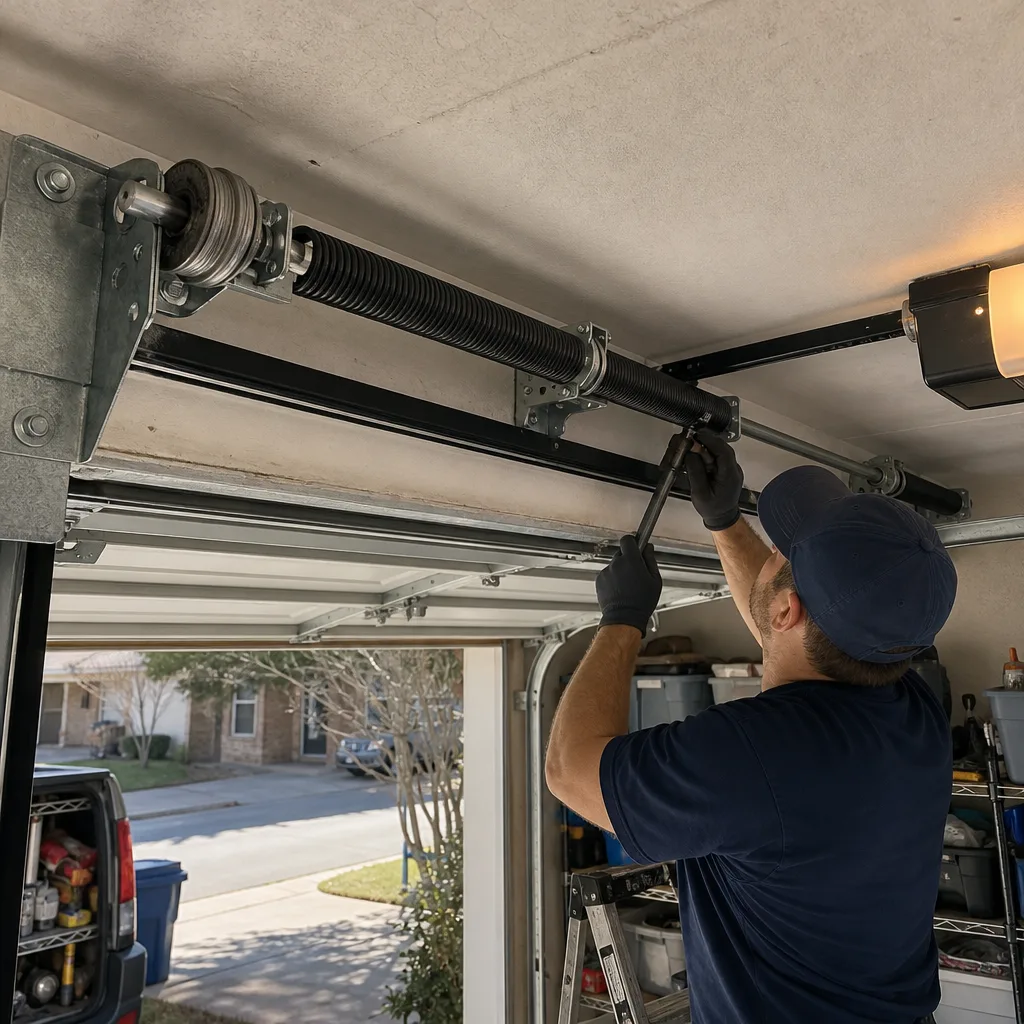
 After
After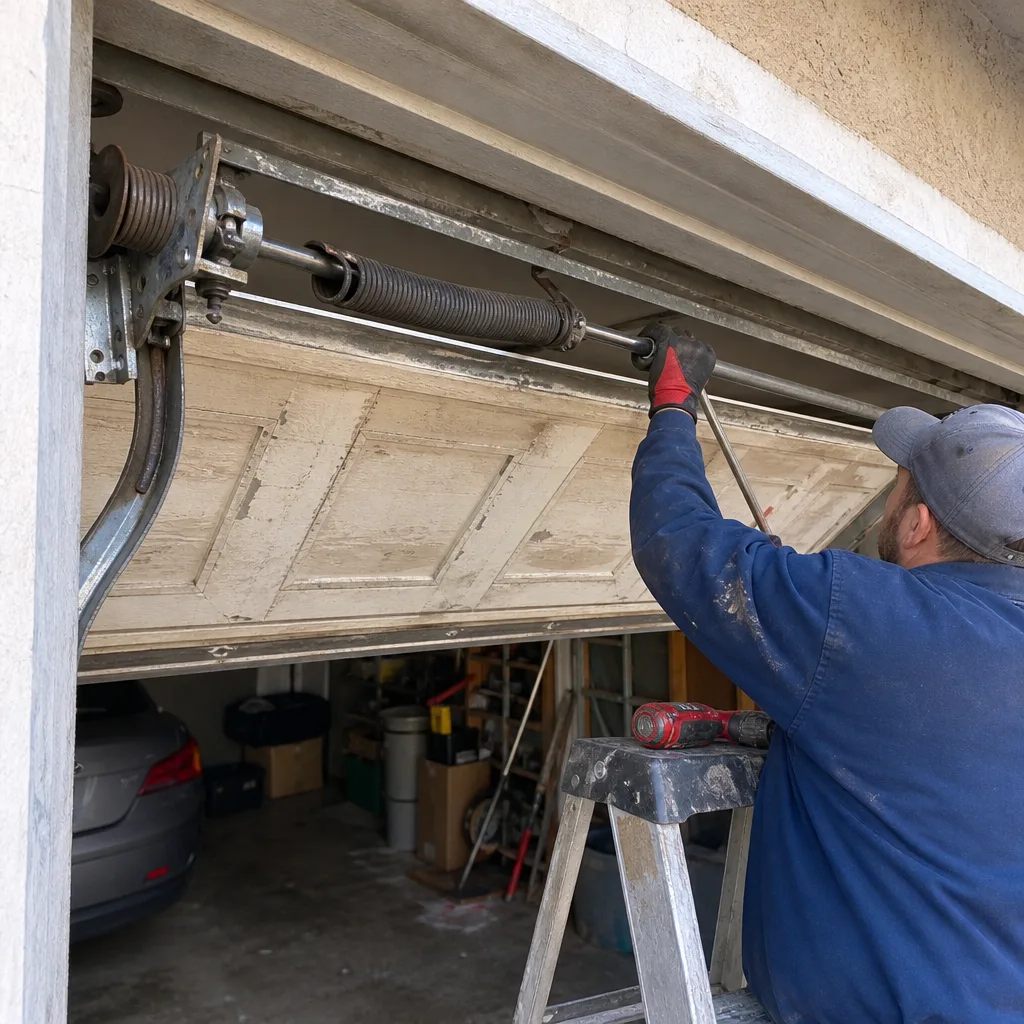 Before
 After
After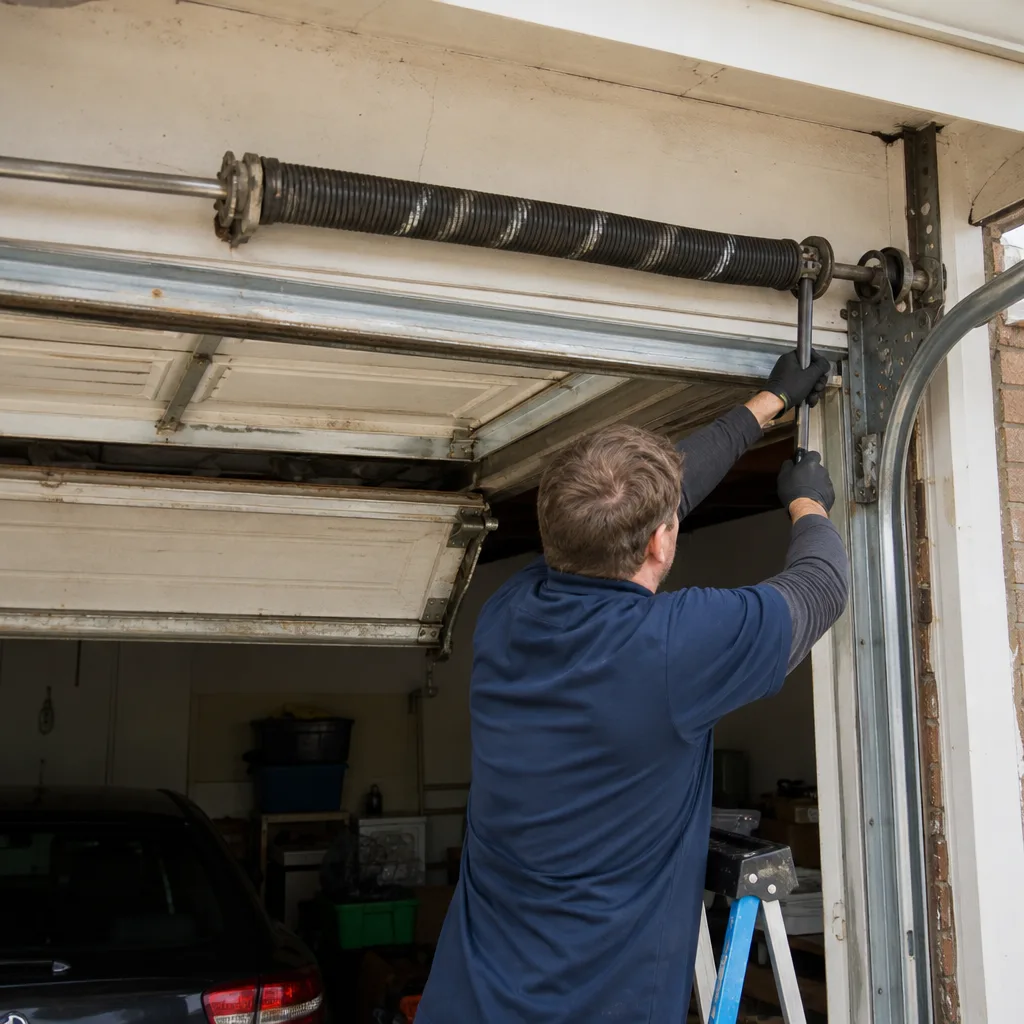 Before
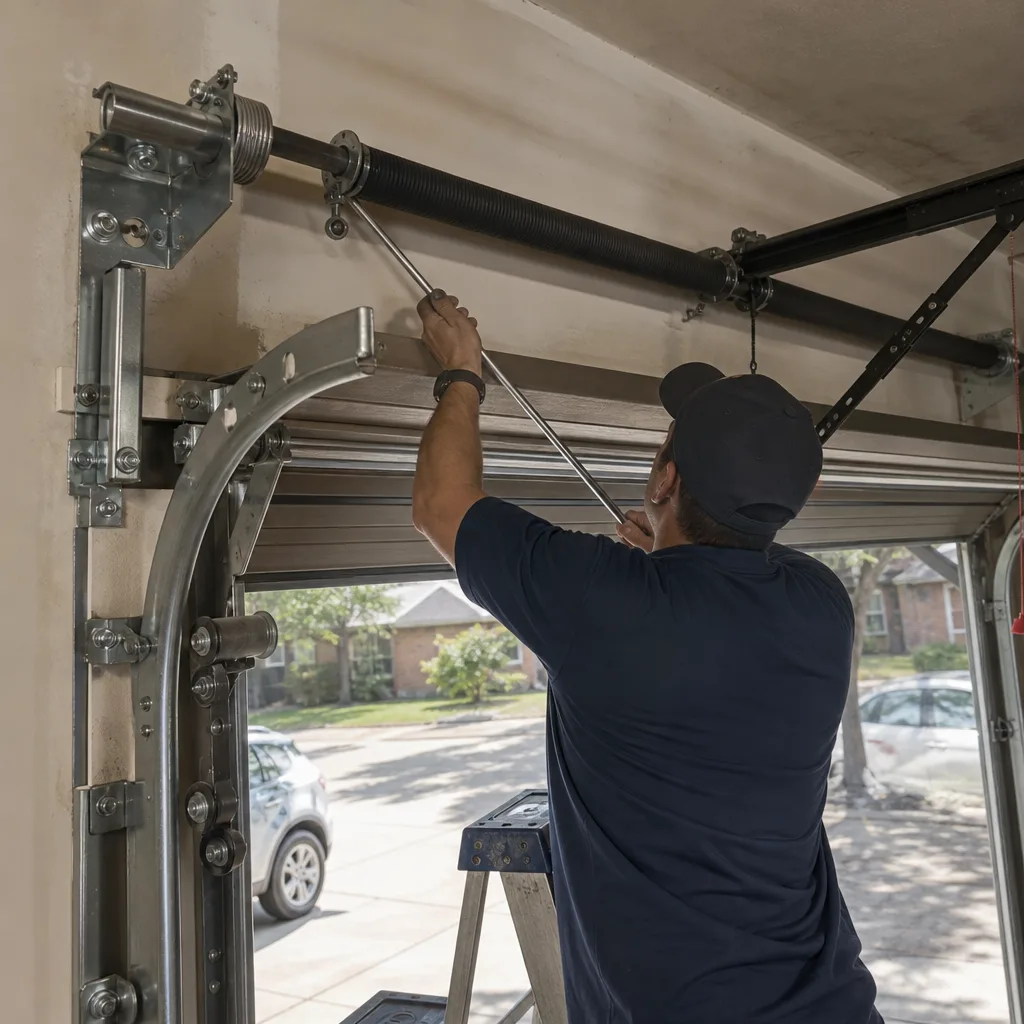 After
After