
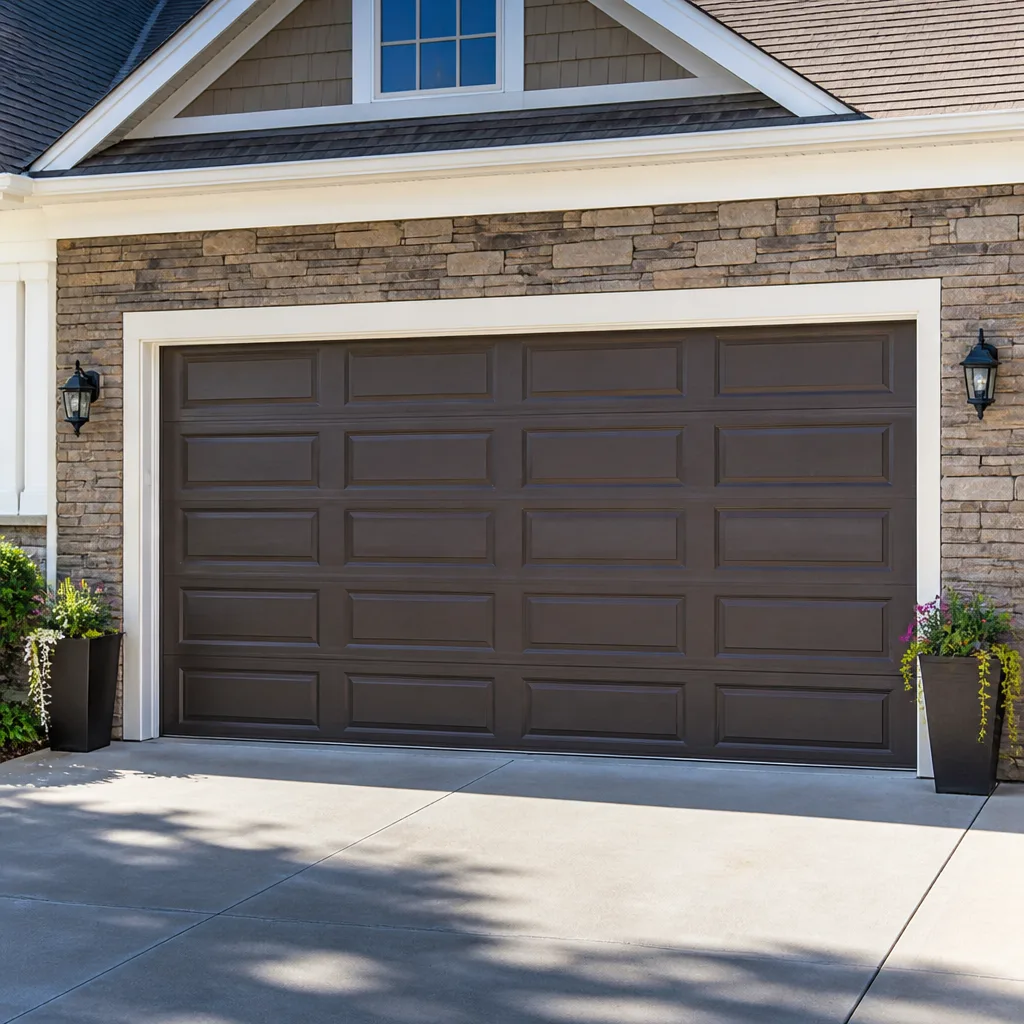
 Raised-panel steel
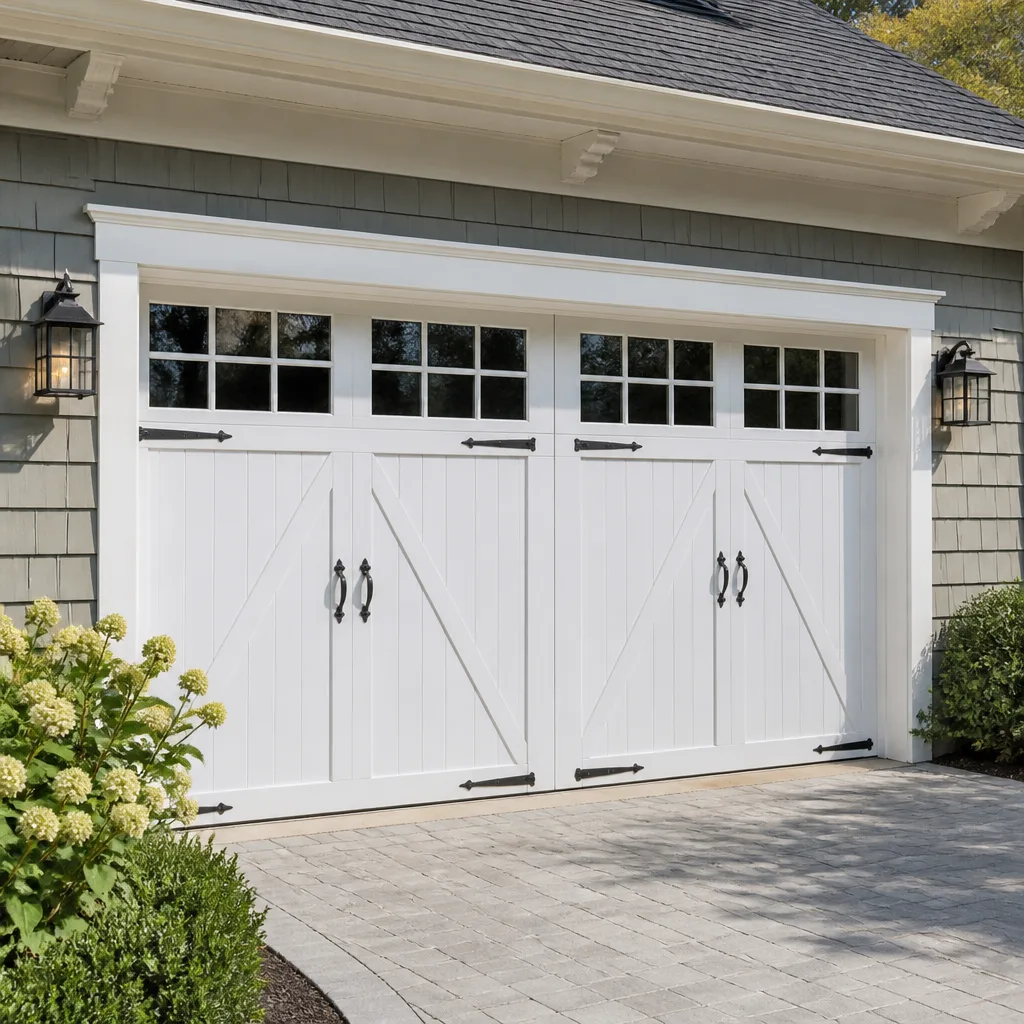 Carriage house
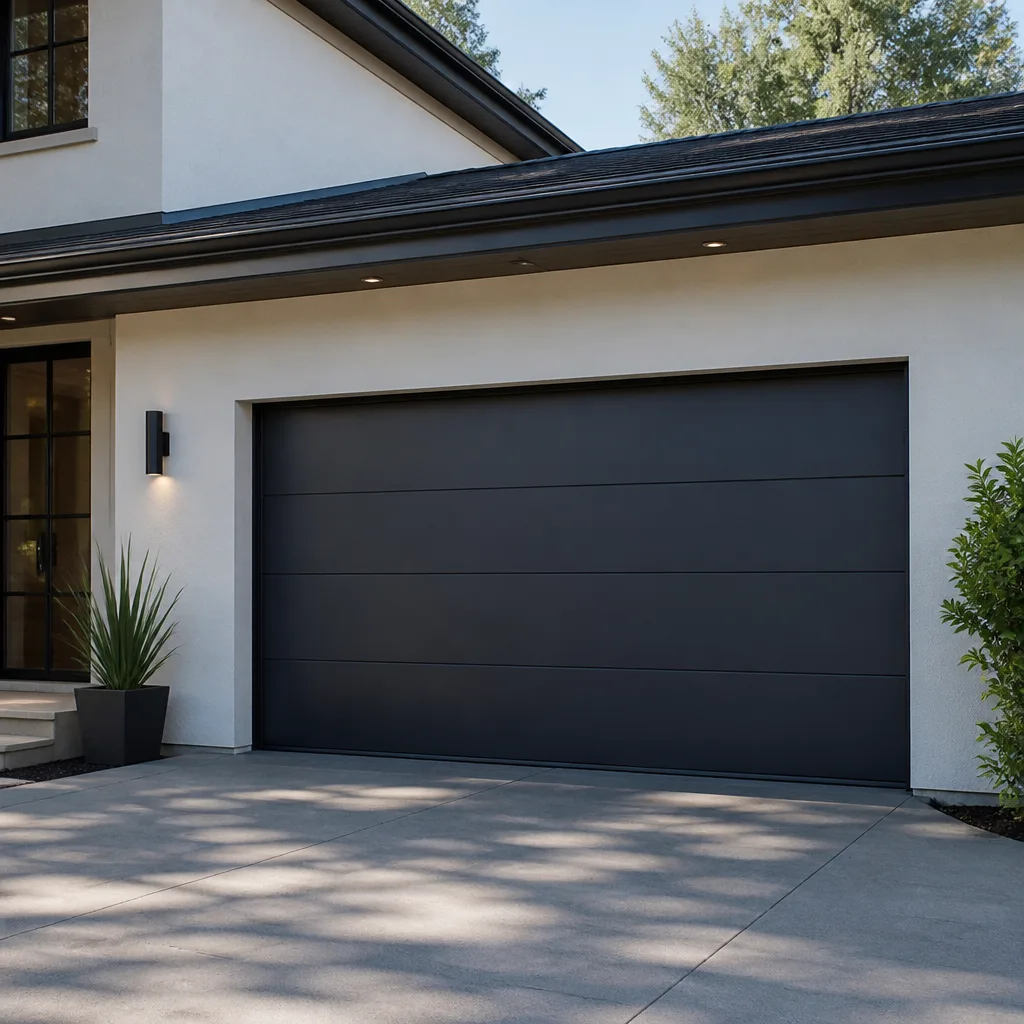 Modern flush
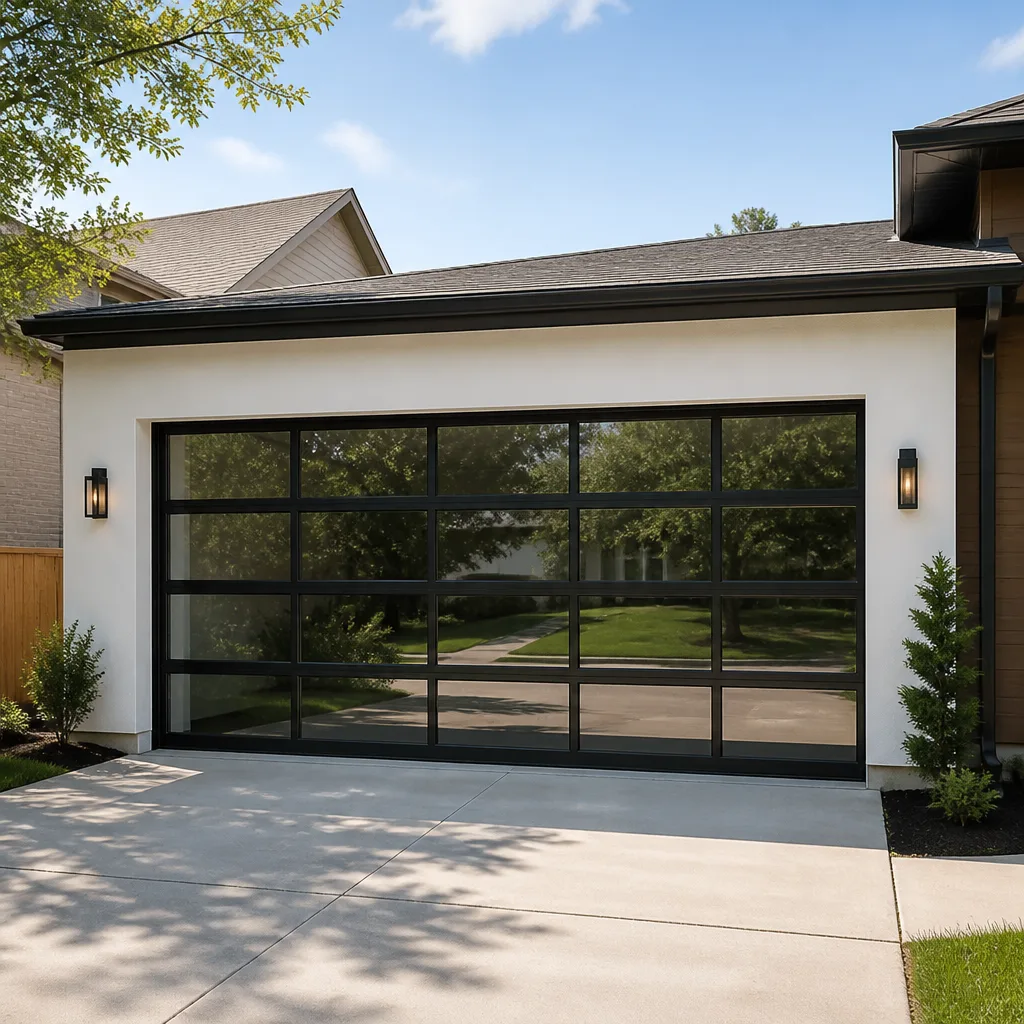 Full-view glass
 LiftMaster openers
 Chamberlain openers
Full 25-point door and opener safety check with every visit - springs, cables, rollers, tracks, and your LiftMaster or Chamberlain opener included
You get a price before we start. It does not change when the truck arrives.
Get your free estimateGenie Roller Replacement: The Fort Worth Owner’s Guide
Genie roller replacement in Fort Worth typically runs $110 – $220 installed, and we stock Genie-compatible rollers on the truck so most swaps happen same-day. The part itself is usually $15 – $40 per roller, with the rest being labor and the small hardware pieces that tend to wear alongside it. Most Fort Worth homeowners discover the problem the same way: a grinding or rattling sound when the door moves, or a door that shudders partway up the track.
What you’re hearing is a roller that’s lost its bearing or worn flat on one side. On a Genie door, the rollers ride inside the vertical and horizontal tracks, and when one fails, the door starts dragging instead of gliding. Left alone, a bad roller puts uneven pressure on the hinges, the track, and eventually the opener itself.
Which Genie Models This Applies To
Genie roller replacement is largely the same job across the Genie lineup, but there’s one compatibility detail that matters more than the opener model: the roller stem length and wheel diameter. Genie residential doors built in the last 20 years almost always use 7/16-inch stems, but the wheel diameter varies. Standard 2-inch rollers cover most Genie doors paired with IntelliG, ReliaG, or TriloG series openers. Some heavier Genie doors, especially 16-foot-wide models, use 3-inch wheels because the larger diameter rolls more smoothly under extra panel weight.
The quick way to identify what you have: look at the roller itself. The stem is the narrow shaft that fits into the hinge bracket. The wheel is the round part that rides the track. If the wheel measures about 2 inches across, you have a standard setup. If it’s closer to 3 inches, it’s a heavy-duty door. We can also match by the hinge number stamped on the bracket, which tells us the stem style without pulling the roller out.
On the OEM-versus-aftermarket question: Genie-branded rollers are fine parts, but honestly, quality aftermarket rollers with sealed ball bearings often outlast them, especially in Fort Worth heat. The difference is the bearing inside the wheel. Sealed bearings keep dust and moisture out, and that matters in a city where garage interiors hit 110 degrees in August. We install both, quote the price difference up front, and let you decide.
Fernbrook Garage Doors Fort Worth is an independent service provider. We’re not affiliated with Genie, but our technicians train on eight major brands including Genie, LiftMaster, and Chamberlain, so the parts and fit are never a guess.
Styles & brands we work with
Signs Your Genie Roller Replacement Is Failing
- Grinding or rumbling when the door moves. The bearing inside the roller wheel has worn out, so the wheel is dragging across the track instead of rolling. The sound usually gets worse as the door travels further.
- Door shudders or jerks on the way up. A flat spot on the roller wheel catches the track at the same point in the cycle every time. You’ll feel it as much as hear it, especially on a door connected to an opener.
- Visible wear on the wheel edge. If you can see the wheel from the side and it looks squared off or has a visible groove worn into its face, the roller has been done for a while. In Fort Worth, grit from dry soil and construction dust accelerates this wear.
- Door hangs slightly crooked or scrapes one side of the track. A collapsed roller allows that corner of the door to dip. The scraping sound against the track is the clue that it’s the roller, not the spring or cable.
- Hinges are wearing unevenly. A failed roller forces the hinge bracket to carry weight it wasn’t designed for. If you see a hinge now angled or loose when the door is under tension, the roller above or below it is usually the root cause.
See the difference
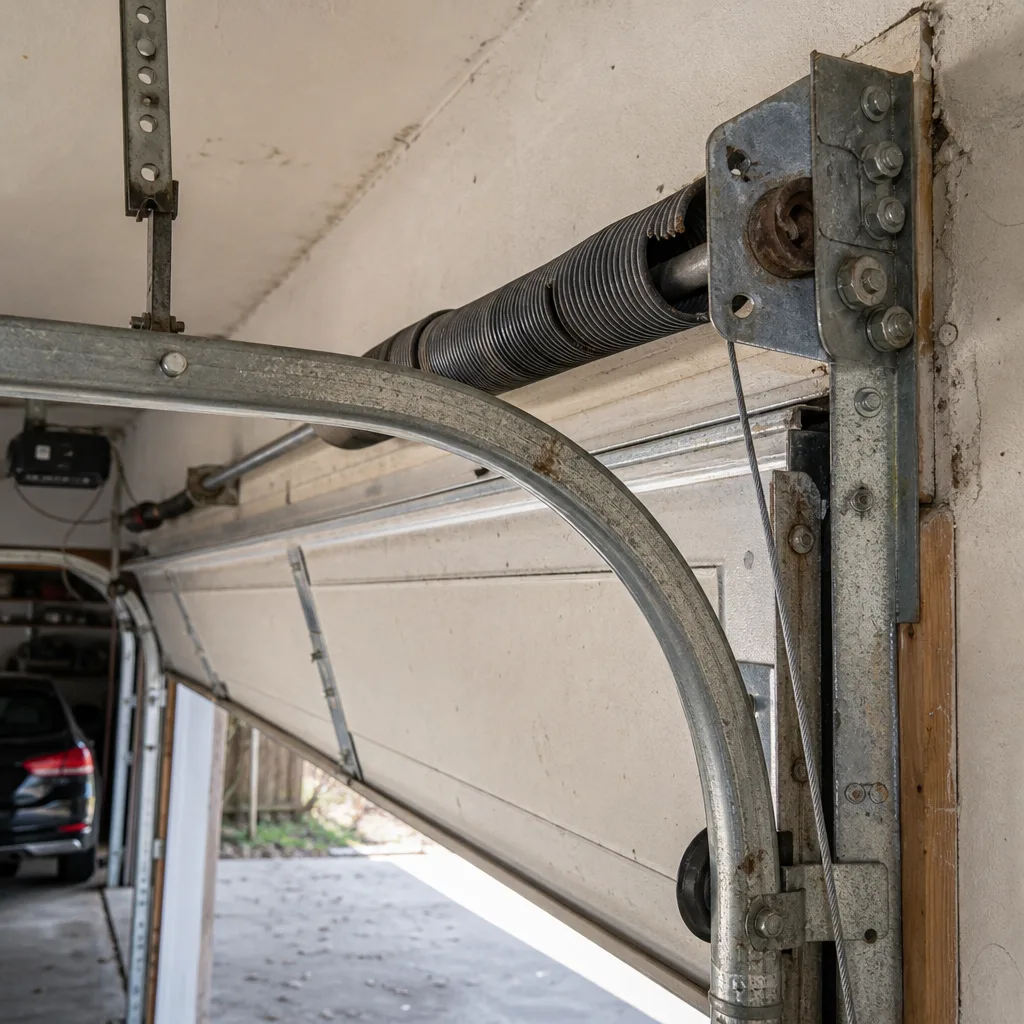 Before
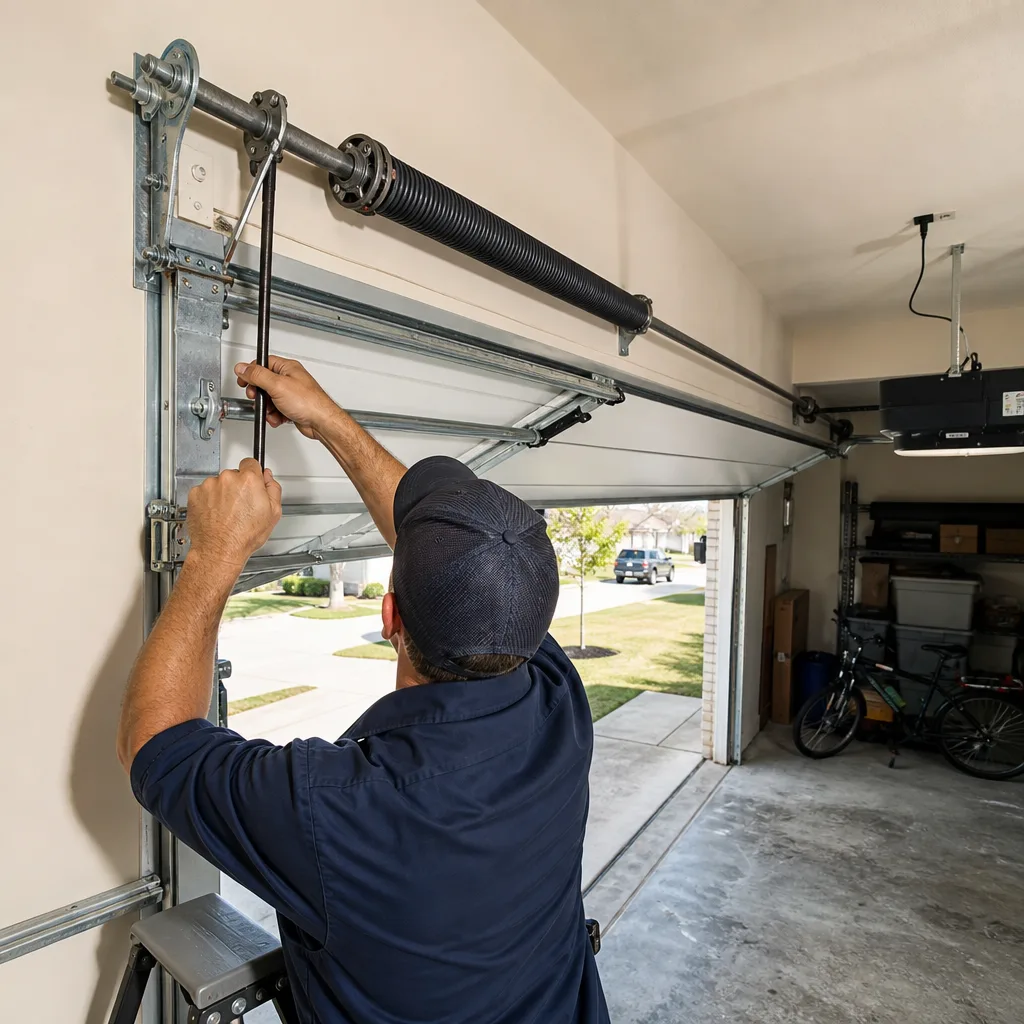 After
After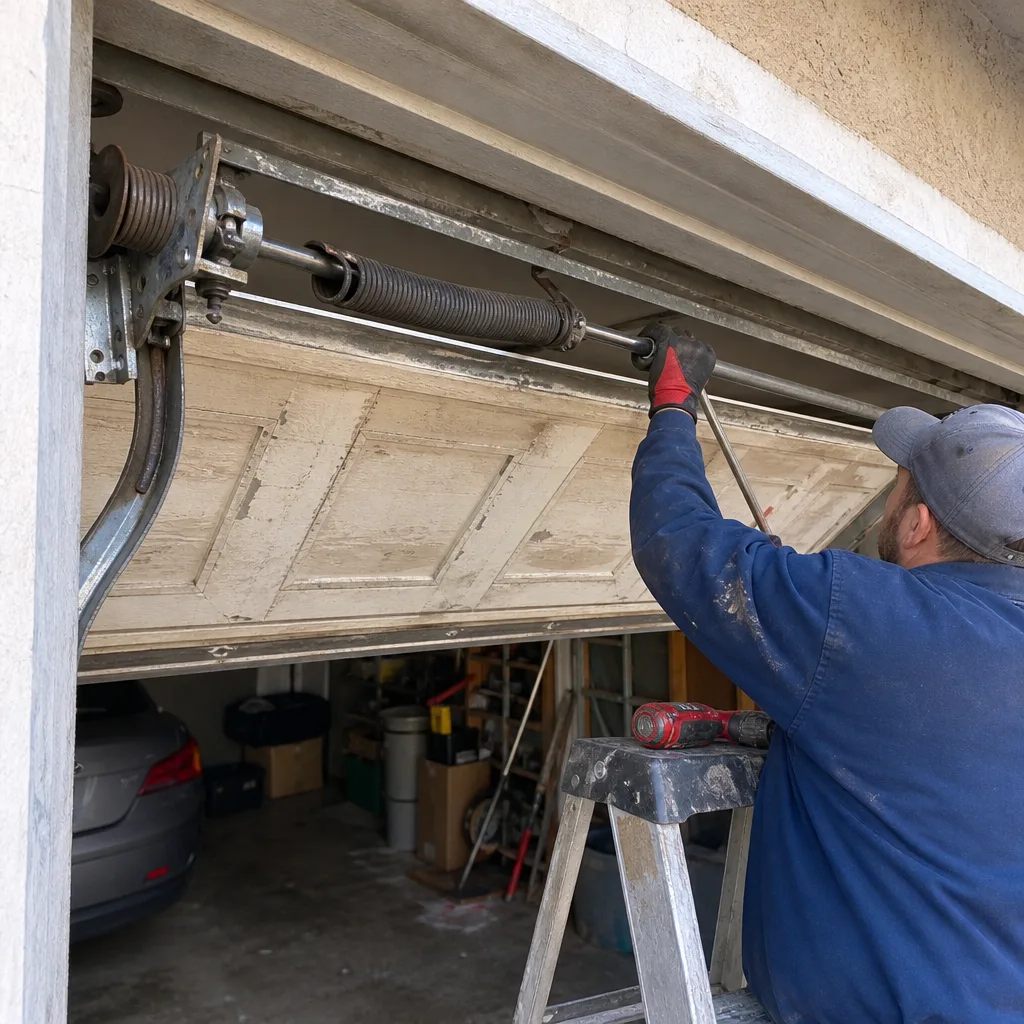 Before
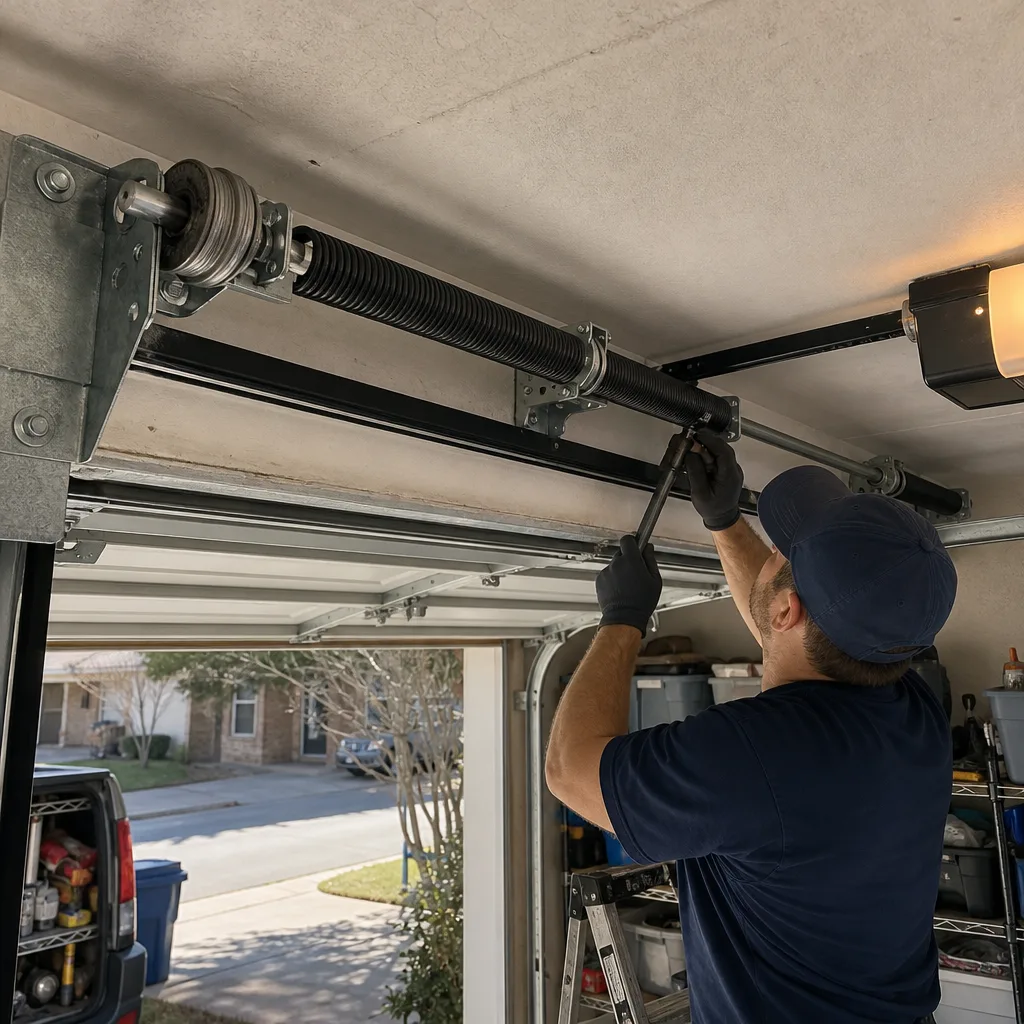 After
After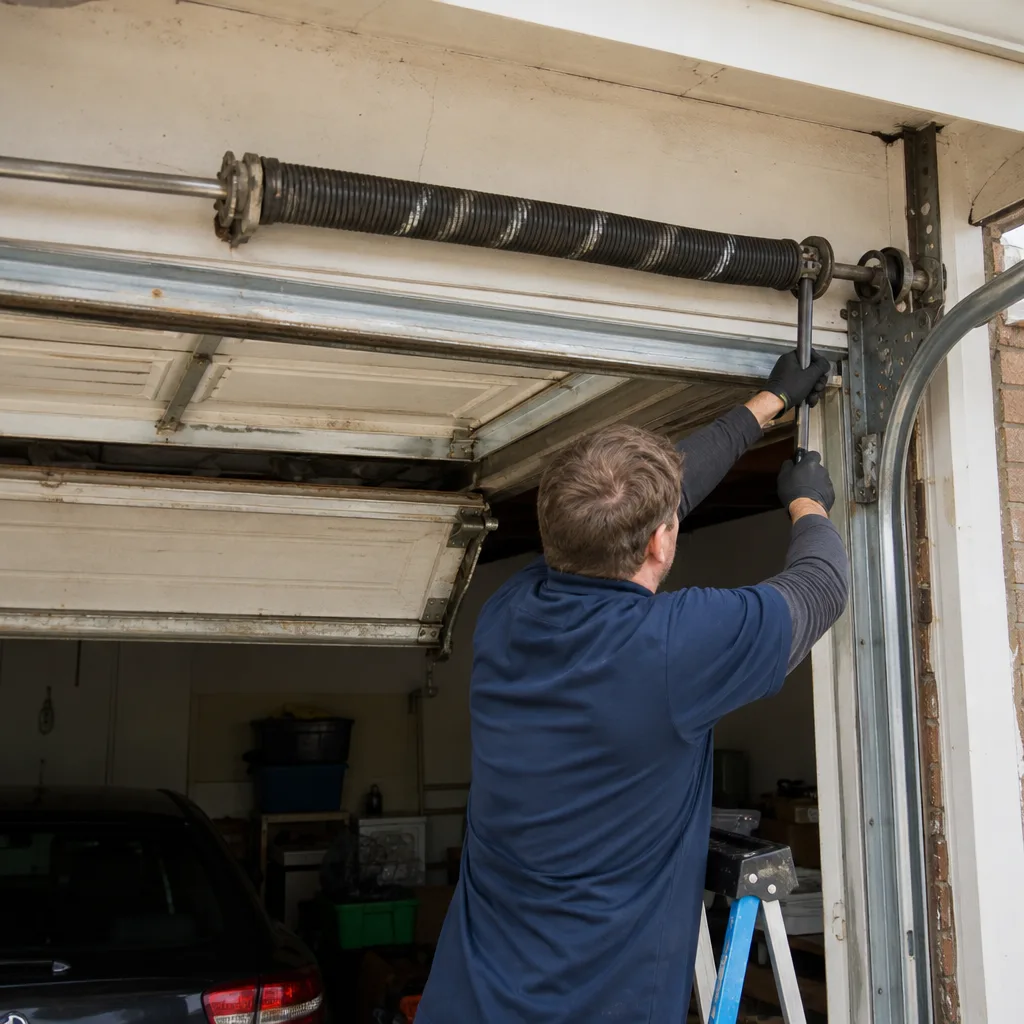 Before
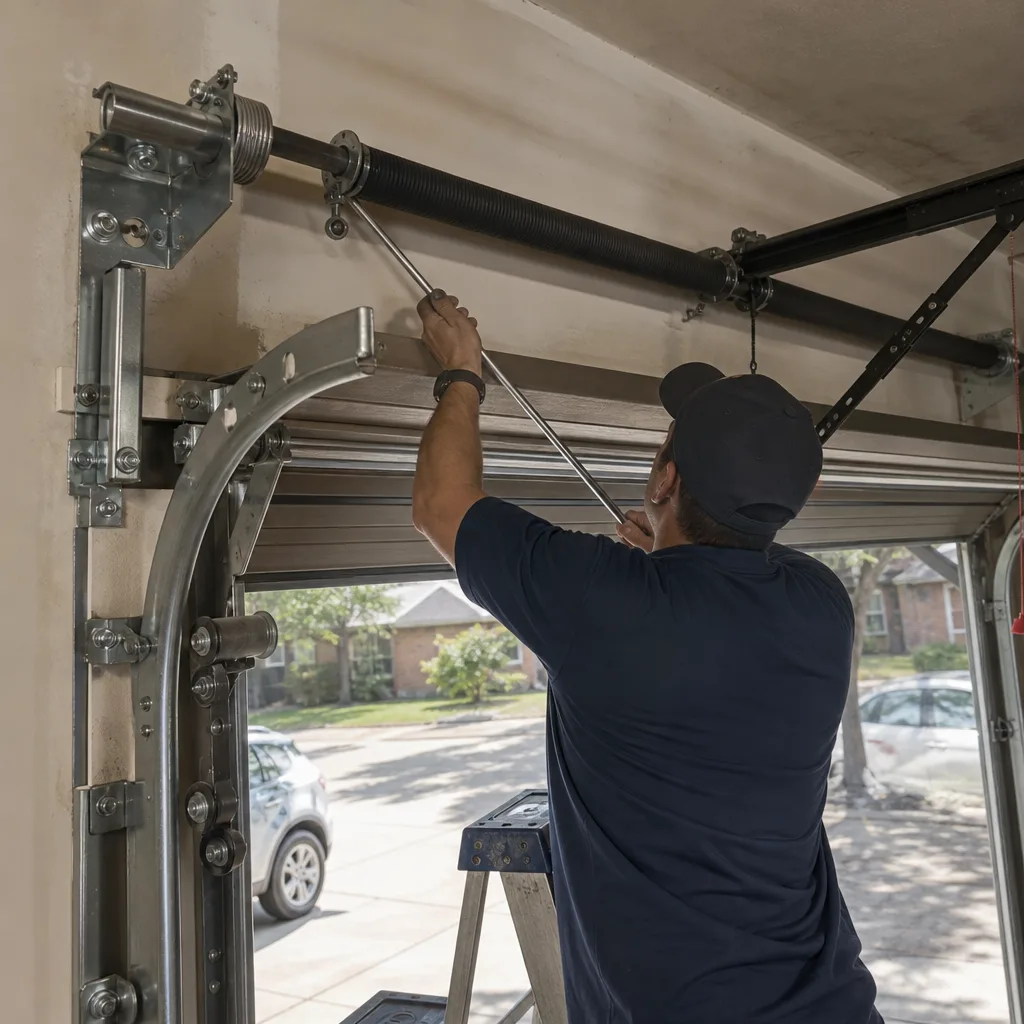 After
AfterReplacement Cost & What’s Included
Genie roller replacement in Fort Worth runs $110 – $220 installed, depending on how many rollers are being replaced and whether the door uses standard 2-inch rollers or heavier 3-inch wheels. Here’s how that breaks down:
- Single roller replacement: $110 – $140
- Full set of standard rollers (10 – 12 rollers): $160 – $200
- Full set of heavy-duty 3-inch rollers: $180 – $220
Every price includes the roller itself, the labor, and an inspection of the surrounding hinges and track on that section of the door. Before any work begins, we hand you a written price. That number is what you pay, unless you ask us to do more while we’re there, and if that happens we write the addition down before we touch it. The replacement is covered by our 365-Day Done Right Promise: if something isn’t right within a year, we make it right. No phone calls, no negotiation.
DIY or Call Us?
You can safely check a few things. Look at the roller wheels on the sides of the door. If you see a flat edge or a gap between the wheel and stem, that’s a roller on its way out. You can also wipe debris out of the track with a dry rag. That’s about where the safe DIY window closes.
Replacing a roller means pulling the hinge bracket off while the door is under spring tension. The bottom roller on a torsion-spring door sits near the cable attachment, and if the bracket comes loose there, the cable can release under tension. That’s a serious injury risk, which is why we recommend a trained professional for any roller that isn’t at the very top of the track with the door fully down. Jesse Calder has spent the better part of two decades working on Genie doors across Fort Worth, including older homes near the Cultural District where the hardware hasn’t been touched since the house was built. He’ll tell you straight if one roller needs replacing or if the whole set is reaching the end of its life. A door that works quietly is one less thing the house asks you to worry about. Call (682) 354-9140 and we’ll walk you through what you’re seeing.
FAQs
Most Genie rollers last 5 to 8 years in Fort Worth, but non-bearing plastic rollers can fail in 3 to 4 years because the summer heat and dry grit work their way into the wheel and wear the plastic down. Sealed-bearing rollers typically last noticeably longer, often 10 years or more with normal use.
No, a worn roller can’t be repaired. The wheel and bearing are pressed together as a single unit, and once the bearing fails or the wheel wears flat, the whole roller needs to come out. The good news is that rollers are an inexpensive part, and replacing them feels like getting a brand new door.
A single roller takes about 30 to 45 minutes. A full set on a standard two-car garage door takes about 90 minutes from set-up to clean-up, including the photo of the finished work before we leave.
Yes, we stock Genie-compatible rollers in the standard 2-inch and heavy-duty 3-inch sizes on every truck, for both 7/16-inch and 1/2-inch stems. Most calls are same-day with the parts in hand when we arrive. Call (682) 354-9140 for an exact quote, estimates are free.
Written by Jesse Calder, Owner, Fernbrook Garage Doors Fort Worth at Fernbrook Garage Doors Fort Worth, serving Fort Worth and nearby areas.